Bamboo vs Tofu Cat Litter: The 2026 B2B Performance & Margin Comparison
Amber Yang
Export Director & Cat Litter Manufacturing Engineer | Hangzhou Plant
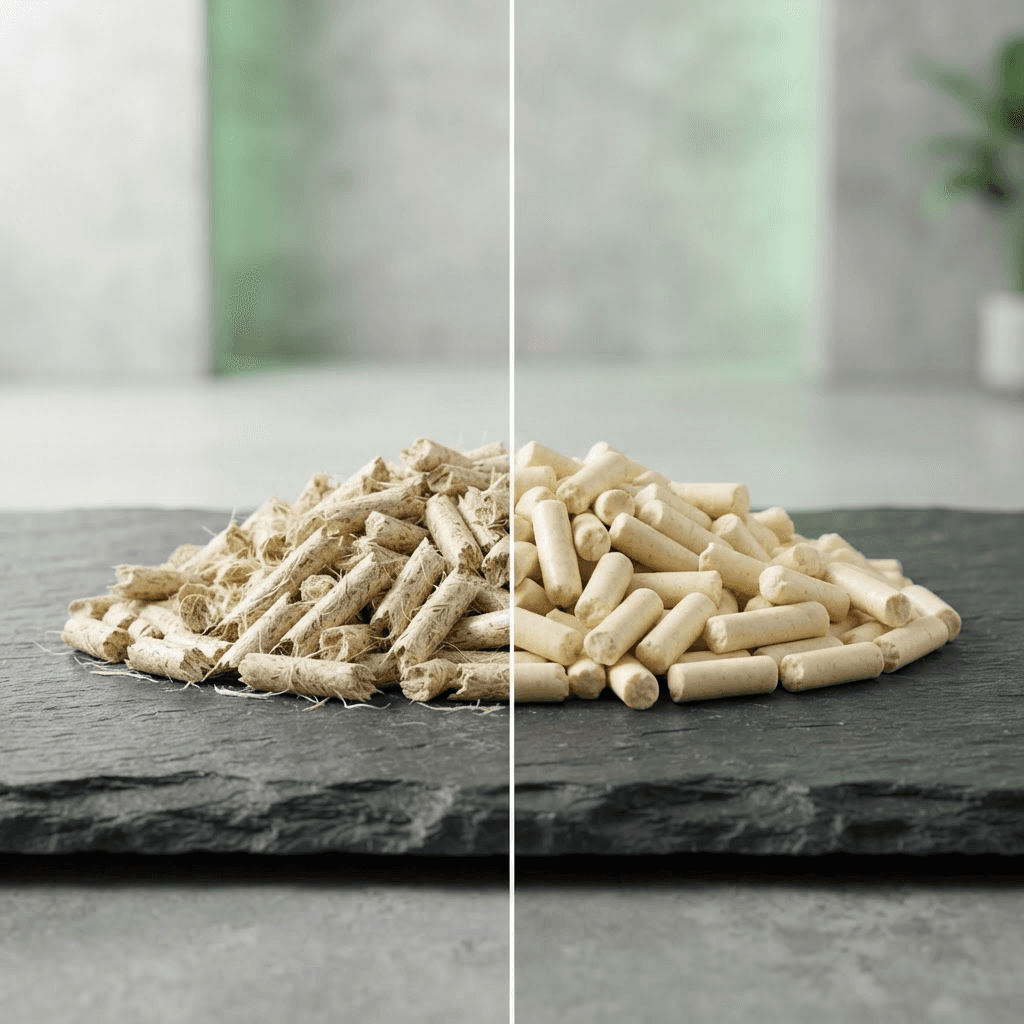
For pet brands sourcing private-label litter in 2026, the decision between bamboo fiber and soybean tofu is no longer just about “eco-friendly” positioning. It is a margin decision that touches raw-material stability, ocean and last-mile freight, and the return rate you will absorb once product reaches humid end-markets. This is the analysis we walk our OEM partners through before the first container ships.
Why the raw material decides your margin
Tofu litter is manufactured from soybean residue (okara) bound with starch. It is a genuine upgrade over clay, but the starch base is biologically active: in warm, humid storage it ferments, producing a distinctive sour smell and, in worst cases, visible mold before the bag is even opened. For brands shipping into Southeast Asia, the Gulf, Latin America, or any coastal warehouse without climate control, that translates directly into returns and one-star reviews.
Alpine bamboo fiber behaves differently because it is inert. Our raw stock is harvested from high-altitude moso bamboo, carbonized, and milled into a fiber that carries naturally occurring bamboo quinone — the same compound that lets bamboo resist rot in the wild. Applied to litter, that compound neutralizes ammonia at the molecular level rather than masking it with fragrance, and it does not spoil in transit.
Bamboo Fiber vs. Soybean Tofu vs. Bentonite
The table below compares the three dominant litter substrates across the six metrics that actually move your P&L and your review score. Tap any row for the manufacturing rationale behind the rating.
Engineer's note: Lower density means more litter per shipping kilo. Bamboo cuts up to 40% on Amazon FBA and courier fees versus clay bentonite on the same retail volume.
The shipping math most brands miss
Litter is a volume-and-weight product, and freight is often the single largest line item after raw material. At roughly 400 kg/m³, bamboo fiber is dramatically lighter than the 900–1,000 kg/m³ of clay bentonite and meaningfully lighter than tofu. On Amazon FBA, where fees are driven by dimensional weight and unit weight tiers, that density advantage can cut fulfillment cost by up to 40% on an equivalent retail pack — margin that flows straight to your bottom line or funds a more competitive shelf price. [Read our detailed logistics breakdown on how ~400kg/m³ density slashes Amazon FBA fees]
Compliance and cat health
Bamboo litter is pH-neutral and 99% dust-free, which matters for cats prone to feline lower urinary tract disease (FLUTD) and for the respiratory concerns tied to crystalline silica in clay products. It is fully flushable, dispersing in under a minute, and septic-safe — a claim you can print on-pack with confidence. Our material ships with SGS and RoHS documentation so your compliance team is not left chasing certificates during listing review.
The verdict for private-label brands
Tofu litter is a reasonable entry product. But if your brand competes in humid markets, sells through FBA, or makes odor-control and flushability the core of its promise, alpine bamboo fiber wins on performance and on landed cost. The higher raw-material price is repaid through lower freight, fewer returns, and a defensible premium position.